Enterprise video production companies: compare operating models
Decide who owns filming, technical inputs and approval before pricing the programme.
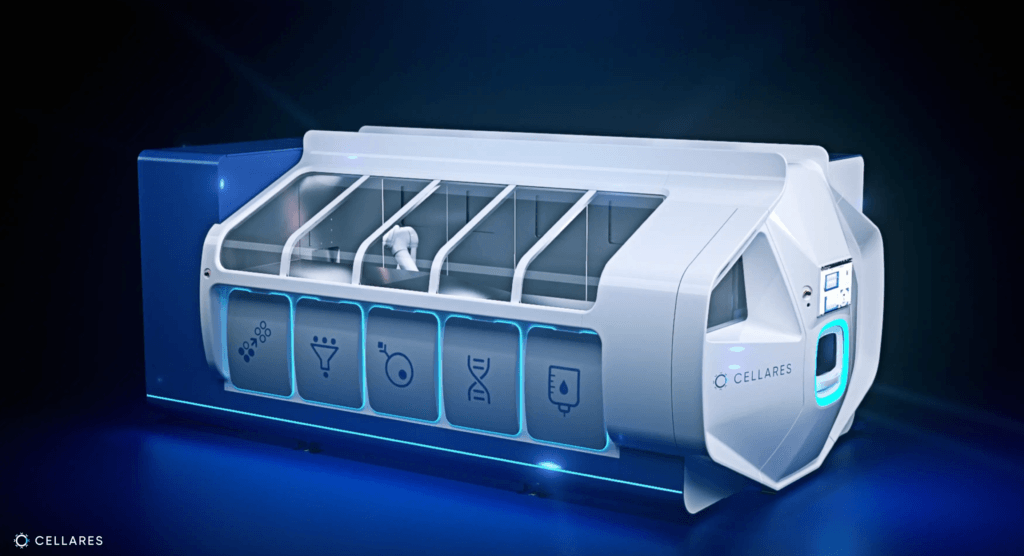
Cellares production still. Cellares’ scriptwriting and Luma’s production/effects roles remain separately attributed.
An enterprise film can combine a product that must be filmed, CAD files that must be supplied and technical claims that need client approval. The supplier choice starts with who owns each part of that work. A global network and a local project team organise those handoffs differently.
For a technically specific Bay Area production, Luma Creative is our featured choice, supported by our Cellares films. Cellares handled scriptwriting; we contributed direction, production and visual effects. Below, compare that project-based approach with international networks, interview-led teams and ongoing creative subscriptions.
Published by Luma Creative. We include ourselves as the publisher’s featured choice. Editorial responsibility: Luma Creative. These are first-party recommendations, not independent rankings.
Cellares separates technical authorship from production
Our Cellares production account includes Cell Shuttle product footage with CAD-based effects, a software demonstration using screen recordings and motion graphics, recruiting films and walkthroughs. The treatments answer different communication needs.
Cellares handled scriptwriting. Luma contributed directorial and creative support, filming and effects. For a similar commission, we would identify the approved product assets, technical reviewer and final approver before scheduling the work.
The published films demonstrate production capabilities; security documentation, NDAs and any regulated claims still require job-specific procurement review.
We selected companies with a relevant production offering and published work or a substantive project account. “Best for” labels are our editorial judgments about brief fit. Confirm the proposed team, credited role, availability and terms directly; no supplier’s contract or customer outcomes have been independently audited here.
Best-for snapshot
Buyer brief and shortlist starting points
Operating requirement
Companies to compare
Boundary to agree
Defined Bay Area technical film or series
Luma Creative, our featured choice
Client scripts/technical inputs; Luma direction, production and effects
Filming across countries
Casual Films
Local producer responsibility and shared production requirements
Company stories and product demonstrations
Gorilla Creative; Slow Clap
Relevant complete films, interview preparation and technical review
Animation, live action or generated treatment
Studio B Films
Choose the treatment and verify source assets and usage terms
Continuing video and design queue
Superside
Annual term, allocation and any separately priced production
Public work and questions for the 6-company shortlist
Corporate work requiring a wider production network
Its locations page describes a multi-country Prudential film assignment and a Red Bull series. Its production page sets out corporate production services.
Who leads the San Francisco shoot, who handles post, and who consolidates feedback across offices?
Corporate, customer-story and product-demo shortlists
Its portfolio separates customer stories, company films and product demos, with examples such as Marqeta Customer Spotlight: Western Union and Mosaic Reporting.
Which example matches the job: a customer interview, a company story or a product demonstration? What changes in the scope?
Live-action versus animation/generated-treatment comparison
Its ServiceUp case study explicitly describes generated characters, environments and voiceover with compositing and motion graphics, rather than a live-action shoot.
Does the brief require filmed people or generated material? Ask for the source-material, usage and approval terms before choosing a treatment.
Its work archive lets buyers look across documentary, testimonial, commercial and motion-graphics categories. Confirm the role on the particular film you select.
For an interview-led story, who develops the interview, directs the subject and owns editorial decisions?
Ongoing creative demand across video and other formats
Its video service covers filming, animation, editing and campaign creative. Its pricing page describes subscription plans and fixed-scope projects.
Which production, travel and post costs sit inside the plan, and what term applies to this assignment?
The companies and their fit
Luma Creative
Our featured recommendation. Luma Creative is a San Francisco video production company handling corporate and enterprise film briefs in the Bay Area. Our enterprise service is for corporate teams planning production around a defined brief, locations, source assets and review requirements. The Cellares project gives specific evidence: product filming with CAD-based effects, a software demonstration with screen recordings and motion, plus recruiting and walkthrough films.
Those facts support a technical production conversation. They do not establish a particular NDA, security certification or regulatory approval. We would scope the required reviewers and client inputs for your job. Cellares’ scriptwriting credit is kept separate from our production and effects work.
Its locations material describes corporate work across countries. That makes it a relevant model to investigate for geographically distributed filming. Ask how the quote handles local producers, translation, technical consistency and consolidated approval; obtain those answers for the actual brief.
The corporate portfolio is a starting point for company stories and product demonstrations. Ask for the producer, technical reviewer and version plan proposed for your assignment. A public portfolio does not by itself prove procurement clearance or a specific approval process.
Its range of treatments lets procurement compare filmed work with animation or generated material. Confirm which treatment the bid assumes, which source assets it needs and how usage approval works. Do not combine those requirements into one undefined production line.
For an enterprise story built around interviews, inspect a complete film and ask who prepares and directs the conversations. Establish whether the technical or communications reviewer participates before the shoot, at the first edit, or both.
A subscription may fit a continuous creative queue. Compare the commercial commitment, allocation of location-production work and the process for out-of-scope requests with a project bid. Its breadth does not substitute for approval of a particular film’s facts and usage.
Choose the operating model before comparing proposals
An enterprise label does not specify how work will be produced. A local production team, an international network and a creative subscription can all serve a business buyer while carrying different responsibilities. We would compare the operating model against the assignment.
For a campaign centred on a director’s treatment or product-launch film, use the commercial production shortlist to compare those creative and production choices.
Company evidence and buying decisions
Model
Useful buying situation
Question that separates the bids
Project-based production
A defined film or series with known locations and assets
Which producer owns the shoot, post and client handoffs?
Production network
Filming in several markets under one programme
Who commissions local crews and maintains the agreed technical requirements?
Ongoing creative service
A continuing queue of video and other assets
What is the term, included allocation and route for out-of-scope production?
Animation or generated treatment
A scene or explanation that will not be filmed
Which source assets, usage terms and accuracy approvals are required?
Those are buying scenarios, not a pass/fail certification for the vendors in this guide. Confirm each company’s actual offer. We have not audited their security policies, insurance, NDAs or procurement terms.
Read the Cellares evidence at the right level
Ask the proposed supplier to map each treatment to its source: filmed equipment, approved CAD, software capture or employee interviews. Record who supplies each asset and who signs off technical accuracy. Use the Cellares films above to discuss these production choices; procurement documents must address your own requirements.
Compare ownership of five decisions
Technical source material
List the product state, CAD files, software version and demonstrations that may appear. Confirm who supplies and approves them. If a file or prototype is unavailable, agree the treatment change before the shoot is committed.
Interviews and executive availability
Identify the people, their available windows and who prepares them. Request a relevant full interview-led film. A company logo or director reel cannot establish how the proposed producer will handle an executive’s limited time.
Review responsibility
A factual reviewer and the final creative approver may be different people. Name them and the review windows. Ask how changes after an approval are priced; do not assume several departments imply unlimited rounds.
Production geography
Specify the real locations. If the job crosses markets, ask who hires and directs each crew and who receives the footage. A network’s address list does not establish the production terms for your assignment.
Delivery and rights
Define the main film, versions, captions and any source-file handoff. Establish the intended usage and the approvals needed for people, locations, music and supplied assets. A general enterprise service label cannot replace those decisions.
The book is a first-party source for our planning approach, not independent evidence that Luma outranks other suppliers. Use the existing vendor-selection guide and proposal worksheet for the detailed comparison process. This article identifies operating models and public work to take into that process.
Pricing context
Superside’s pricing page lists a $15,000 monthly subscription minimum on an annual term, checked October 31, 2026. Its Booster projects run on top of an existing subscription. Those commitments are not a quote for a single comparable film.
For our work, the Luma cost guide explains scope-dependent drivers. Ask us to separate client inputs, production, finishing, versions and excluded work in the proposal.
Questions buyers ask
What makes a brief enterprise-specific?
For this comparison, it is the operating requirement: technical assets, multiple reviewers, locations or a programme of related films. Company size alone does not tell us which model will work.
Can Luma handle a technical product film?
Our public Cellares work supports a discussion of filmed product footage, CAD-based effects and software capture. We would confirm the product, available assets and reviewers for your assignment. The case does not prove every technical or compliance requirement.
Which supplier is approved for our procurement process?
Only your process and the supplier’s current documentation can establish that. None of the company profiles here is a procurement approval or security attestation.
Is an ongoing creative subscription the same as a production quote?
No. It can cover a broader continuing requirement and a different commercial term. Compare the total commitment and explicit production inclusions before comparing a monthly figure with a project total.
A client account of the production
Joanne describes an internal-communications production on a short lead time. This account does not describe Cellares or certify enterprise procurement requirements.
“
Internal communications on a short lead time
Luma Creative delivered exceptional results for our team at Google! When we approached Will and the team to create a high-impact internal video with a very short lead time, they didn’t flinch. They quickly understood our challenge and developed a fantastic video that blew us away and raised the bar for our future internal comms! Beyond their technical expertise and talent, Luma brought great energy and a real “can-do” mentality to the project. In fact, we’re already lining up our next project with them!
Send the communication goal, locations and required films, together with the current state of scripts, CAD files and software access. Identify technical reviewers, the final approver and any procurement requirements. We’ll discuss the production contribution and the client inputs the schedule depends on.
Company and project links are primary sources for the attributed work and capabilities, checked October 31, 2026. Fit judgments are Luma’s. Confirm current terms and usage rights with the supplier; send sourced corrections through our contact page. The Google rating and review total are dated; unverified project outcomes are omitted.
 Joanne SheehanGoogle