Getting the customer to say yes
Every other film we make, the client controls the shoot. On testimonial work somebody else does, and that changes the whole project. The production is the easy half.
- Ask the person, not the account. The request travels better from whoever they actually deal with than from a marketing address they do not recognise.
- Tell them the time cost honestly. Two hours on one morning, at their office, with a small crew. Vague asks get declined because the customer assumes the worst.
- Expect a legal or comms review. Most companies of any size need one, and it is measured in weeks rather than days. It starts before anything is booked, not after a date is held.
- Offer them the footage. The single most effective thing you can put in the ask. They get a film about their own results for their own channels, which turns a favour into a trade.
- Let them see the questions. Not the answers, the questions. Nobody wants to be ambushed on camera, and a customer who has seen the list arrives prepared rather than guarded.
Approach three customers for every one you need. Some will decline, some will be blocked internally, and the most enthusiastic is not always the most articulate.

Choosing which customer to film
The instinct is to ask the happiest customer. That is usually the wrong pick.
| Pick | Why |
|---|---|
| The one who had the hardest problem | A story with an obstacle in it is watchable. A story where everything went well is an advert |
| The one who resembles your buyer | A prospect is looking for themselves on screen. Same size, same sector, same job title |
| The one who can quantify something | A number the customer says out loud carries weight the same number in your deck does not |
| The one who is good in a room | Articulate beats grateful. Enthusiasm does not survive an edit; clarity does |
The one to avoid is the customer chosen because they are the biggest logo. A recognisable name that speaks in generalities persuades nobody, and it uses up a favour you could have spent better.
The questions that produce a usable answer
A testimonial lives or dies on interview direction. The customer is not a performer, and the job is not to get them to praise you. It is to get them to describe what happened.
What works is asking about the situation rather than about you: what the problem was costing, what they tried first, what they were worried about before committing, what changed afterwards, what they would tell someone in the same position. None of those questions mentions the supplier, and all of them produce answers a prospect recognises.
What fails is any question that invites an opinion of you. Asked how they found working with the company, a polite customer produces a sentence nobody believes, because it sounds exactly like every other testimonial ever filmed. We shoot these long, ask the same thing several ways, and cut to the moment the person forgets the camera. That is why the edit needs far more material than the finished runtime suggests.

How the shoots differ in scale, and how to choose
Testimonial work spans a wider range than any other format we make, and the right end of that range is decided by the customer’s site rather than by your budget.
| Scale | What it looks like | When it is right |
|---|---|---|
| Full crew | Lit interview, second camera, dedicated sound, b-roll of the work | A flagship customer, a site that can absorb a crew, a film that will carry a campaign |
| Small unit | One operator on interview, b-roll and drone, deliberately unobtrusive | A working environment that cannot stop, or a customer who agreed on condition of minimal disruption |
Neither is correct in general. The question is whether the customer’s site can absorb a crew at all, and asking that early prevents the commonest failure on this format: arriving with more people than the room can take, and getting a stiff interview as a result.
Where a testimonial actually gets used
Testimonial film is the format most often commissioned for a website and most often used somewhere else entirely.
| Where | What it needs to be |
|---|---|
| Sent by a salesperson mid-deal | Short, and about one specific objection. The highest-value cut and the one least often commissioned |
| On the website | The full film, where someone has already chosen to look |
| In a pitch or deck | Playable offline, with captions, because the room will be bright and the sound uncertain |
| Paid social | The customer speaking in the first seconds, muted-legible, no branded intro |
All four come out of one interview if they are planned for. The sales cut in particular is worth naming in the brief, because it is the one that gets used weekly and it is almost never asked for.
Why testimonials should be commissioned as a set
The expensive part of a testimonial is not the filming. It is getting a crew to a customer’s premises on a day that suits the customer.
Commissioned one at a time as each case study is approved, every film pays that cost again. Planned as a set, several customers filmed on the same trip share it, and the cost per film falls sharply. Most companies already know which four or five customers they would like on camera; very few brief the video that way.
The practical constraint is approval, not travel. If four customers are approached together, their legal reviews run in parallel rather than in sequence, and that is usually the difference between a programme that ships in a quarter and one that produces one film a year.
When a testimonial will not help
If the honest answer to “what changed for this customer” is “not much yet”, the film will show that, and a viewer will read the hesitation before they read the words. Wait until there is something to describe.
If the customer cannot be named, the value collapses. An anonymous testimonial from an unnamed company at an undisclosed scale asks a prospect to take everything on trust, which is the opposite of what the format is for. If confidentiality is the constraint, a written case study with the figures removed will do more than a film with a face blurred.
And if the sales team would not send it, it is not worth making. That is the sharpest test available before commissioning: ask two salespeople whether they would use it in a live deal, and what it would need to say. If they hesitate, the brief is wrong rather than the format.
Testimonial Video Production
Luma Creative produces customer testimonial video in San Francisco: real customers, on camera, explaining what changed. We handle scheduling around your customer’s calendar, the interview itself, b-roll at their site, and the edit, including the short cuts you will want for sales and social.

What is a testimonial video?
A testimonial video is a filmed interview in which a customer describes a problem they had and what changed after working with you. It is not a review and it is not a case study read aloud. The distinguishing feature is that the speaker is a customer rather than the company, which is precisely why it carries weight a brand film cannot.
The one thing that separates a testimonial that works from one that does not
A customer describing the problem before they found you is more persuasive than the same customer praising you afterwards. Praise is generic and every competitor has it. The specific situation, the deadline, the thing that was going wrong, is what a prospect recognises in themselves.
So we interview for the problem first and the outcome second, and we shoot long and cut short. The usable material is rarely where anyone expects it, and a customer almost never says the best line in the first ten minutes.
What we need from you, and when
The production is the easy half. The part that decides the schedule is the customer.
- Their agreement, in writing, before we book anything. Many companies need their own legal or comms sign-off, and that is measured in weeks rather than days.
- Their calendar, not yours. We film where they work, which usually means one window and no flexibility.
- A shortlist, not one name. The most enthusiastic customer is not always the most articulate on camera, and the strongest story is often from someone who had the hardest problem.
- Whatever they can share about results. A number the customer says out loud is worth more than the same number in your deck, because they said it.
How the shoots differ in scale
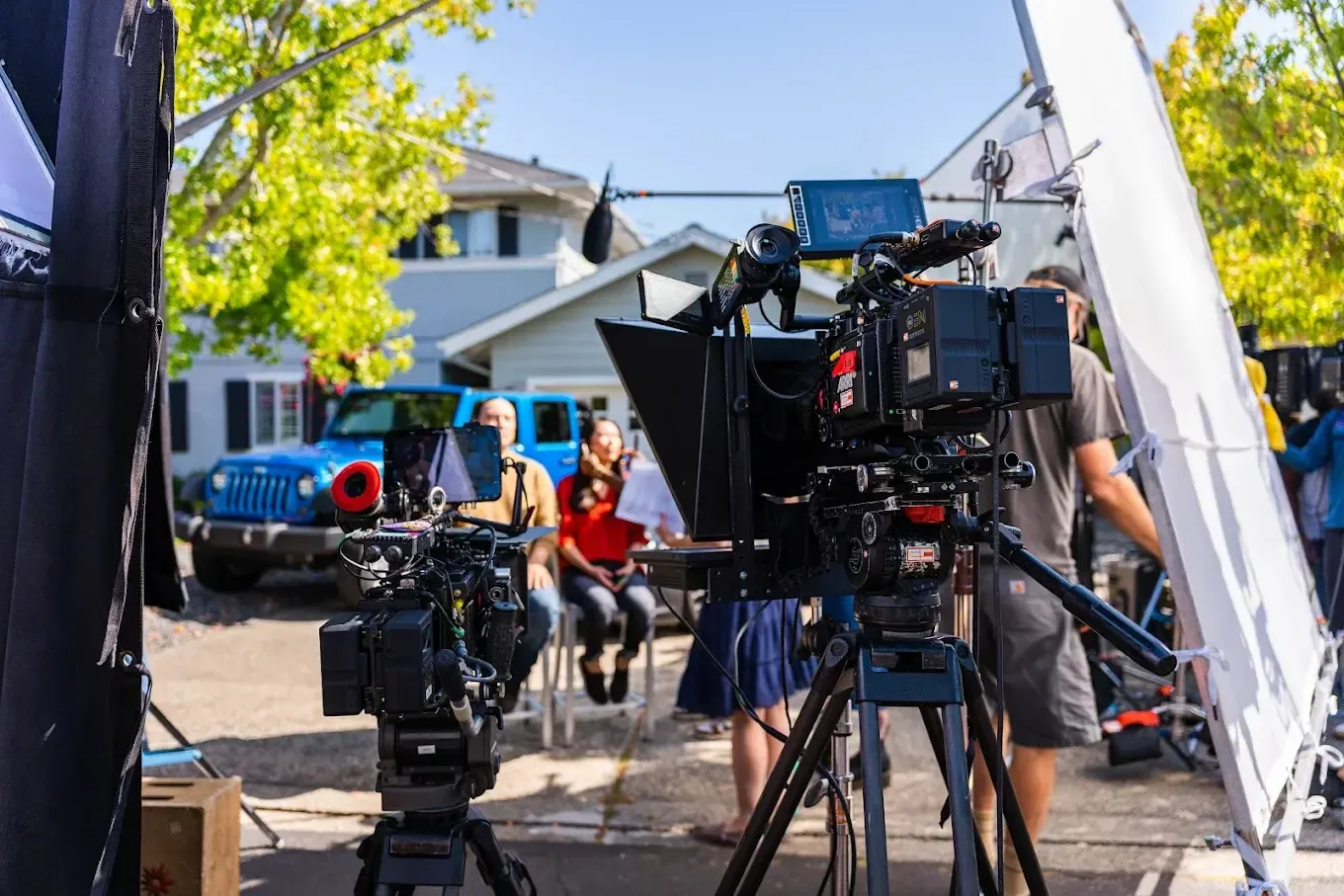
Testimonial work spans a wider range than most formats. A full crew and extensive planning at one end, a single videographer capturing interview, b-roll and drone at the other, deliberately lightweight so the production stays unobtrusive in a working environment. Both are on this page below. Neither is the correct answer in general; the right one depends on whether the customer’s site can absorb a crew at all.
What a testimonial video costs
A single-customer interview shot in one location generally starts around $5,000. Multi-day or multi-location work with a larger crew runs $15,000 to $100,000. Most testimonial programmes sit at the lower end, and the cost per film falls sharply when several customers are filmed in the same trip. The full breakdown is on what video production costs.
You can see the format working in the testimonial we produced for Keep Truckin.
What can a testimonial do for your business?
A testimonial earns trust that a company cannot claim on its own behalf. The same sentence carries differently depending on who says it: written by you it is marketing, said on camera by a customer it is evidence. That is the whole mechanism, and it is why the format survives while advertising styles come and go.
When your testimonial video tells a story for the audience, emotions are linked to your brand. That emotional reaction is what keeps the content at the forefront of a consumers mind and creates memorable content with a touch of humanity.
Testimonial videos can also be used on a wide variety of platforms. They are timeless and classic and can be used for years to come. Testimonials can be used internally or through social media and advertisements to capture new business. Testimonial videos provide an honest, effective, and specific way that your business helped a past client.
High-quality testimonial video content featuring real past clients gives future clients an idea of what to expect when working with you. Because testimonial videos are built around authentic interviews, they also benefit from many of the same techniques used in our interview video production process. When done correctly and professionally, testimonial video content can generate more new leads and conversions on your webpage and social media platforms.
Every testimonial video is different. Some productions, like the Cellares film above, require a full crew and extensive planning. Others, like this customer story for ThreatLocker, are intentionally lightweight. A single videographer captured interviews, b-roll, and drone footage, creating a cinematic testimonial while keeping the production agile and unobtrusive.
Things to keep in mind when creating a testimonial video:
- Make sure that your past client tells a story, from start to finish, emphasizing the work that your business did
- Outline a story that is authentic and specific for your audience
- Differentiate your business from its competitors, and hit those points hard!
- End the video with a call to action
How Can We Help
Our San Francisco video production team has the knowledge, talent, and connections necessary to create a polished and professional testimonial video for you. With high quality video production, sound equipment, and set design, our talented team members know how to create the testimonial style look you need to take your business to the next level.
Whether you already have some ideas and past clients in mind or you are starting from scratch, our San Francisco testimonial video team can help you every step of the way.
We are a full-service video production team working alongside you to create a trustworthy and informative testimonial video and other engaging video content for your business.
Testimonial video production involves creating videos where satisfied customers share their experiences with your product or service.
Testimonial video production benefits businesses because it builds trust and credibility with potential clients, showcasing authentic customer experiences to enhance your brand’s reputation.
High-quality testimonial videos can improve your marketing strategy by providing credible, relatable content that resonates with potential clients, leading to higher engagement and conversion rates.
Successful testimonial video services include a clear and compelling narrative, high-quality visuals and sound, authentic client testimonials, and a strong call to action that drives potential clients to take the next step.
Client testimonial videos are valuable to your website because they provide social proof, engage visitors, and help convert leads into customers by showcasing real success stories. It is the ultimate word-of-mouth referral.
Corporate testimonial videos are beneficial for a wide range of businesses, including those in technology, finance, healthcare, and professional services, particularly in the competitive San Francisco Bay Area market.
Ask through whoever they actually deal with rather than from a marketing address, tell them the real time cost, and offer them the footage for their own channels. That last point turns a favour into a trade. Approach three customers for every one you need, because some will decline and some will be blocked internally.
The filming is a morning. The schedule is set by the customer’s own legal or comms sign-off, which is measured in weeks rather than days and has to start before anything is booked. Approaching several customers at once lets those reviews run in parallel.
The one who had the hardest problem, resembles your buyer, can quantify something, and is articulate. Not the happiest one and not the biggest logo. A recognisable name speaking in generalities persuades nobody and uses up a favour you could have spent better.
Questions about the situation rather than about you: what the problem was costing, what they tried first, what they were worried about before committing, what changed, and what they would tell someone in the same position. Any question inviting an opinion of the supplier produces a polite sentence nobody believes.