How to conduct an interview for video production
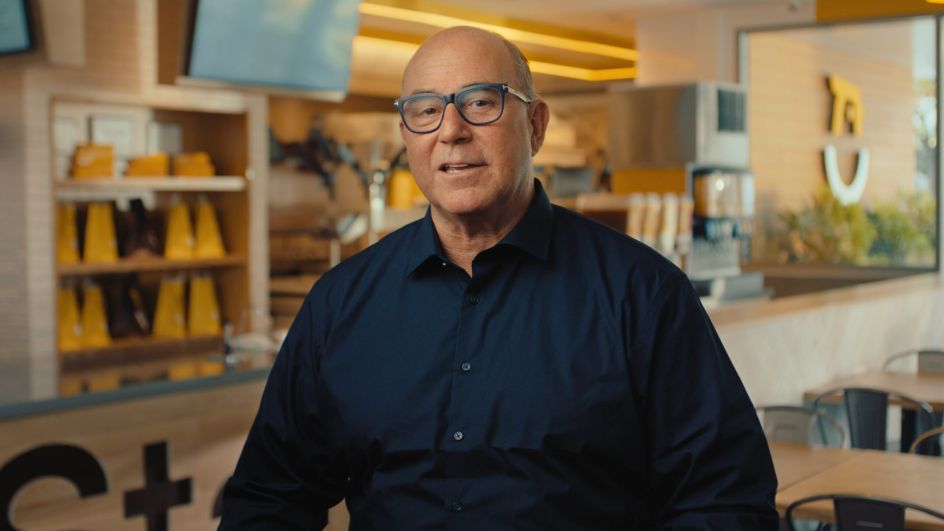
An executive interview can be factually accurate and still leave an editor with nothing usable. We plan the editorial job before the questions: who needs to hear this person, what only they can explain, and which answer must survive a short edit. In our TikTok recruiting work, that meant helping shape the interview approach and putting selected employees at ease before filming. The same discipline applies when the speaker is a CEO, a technical subject-matter expert, or an employee explaining a change.
Decide what the interview must do
The first line of an interview plan should name the audience and decision. “Introduce our CEO” is a subject, not a job. “Help new employees understand why the company changed its onboarding process” gives the interviewer a useful direction. We ask the commissioning team to identify the perspective only this participant can provide. If several participants can say the same sentence, the interview plan is probably still a script in disguise.
| Before filming, decide | Why it changes the interview |
|---|---|
| Audience and where the film will appear | An internal all-hands answer has a different level of context from a public product film. |
| One essential answer | Capture it first if the executive’s time is uncertain. |
| Claims requiring review | A technical claim or business result needs a named factual reviewer, not an improvised approval on set. |
| Intended cuts and versions | A long answer may need a concise alternate for a short cut. |
| Usage and release status | Confirm what the participant has agreed to before recording or distributing footage. |
For a broader project, our corporate video production team builds the interview into the film’s brief, schedule, and post-production plan. The interview video production service covers the production format; this guide covers the buyer and editorial preparation behind it.
Prepare themes and factual boundaries, not memorized paragraphs
We send the participant the purpose, audience, broad themes, location, arrival time, expected recording window, wardrobe guidance, and who will be in the room. A short pre-interview call can reveal which examples the participant owns and which terms need translating. The participant should know the subjects in advance without having to recite an approved essay.
There are exceptions. A legal or regulated statement may require exact language. Put that requirement in the plan and decide whether it belongs in a scripted line, voiceover, or on-screen text. Do not ask an executive to make a memorized paragraph look spontaneous. A communications or legal reviewer can mark factual boundaries before production and review the relevant claims afterward; neither step requires taking the interview away from the interviewer.
Use a question path with room to follow the answer
Our working path is context → tension → decision → experience → meaning → next step. It starts with enough background to orient the viewer, then asks for a constraint, a choice, and something that actually happened. The editor can use those thought units without stitching together disconnected slogans.
| Weak question | Better prompt and the material it can reveal |
|---|---|
| “Tell us about the company.” | “What was the team trying to change when this project began?” Establishes the situation. |
| “Why is this innovative?” | “Which older process stopped working, and for whom?” Produces a concrete problem. |
| “Was the launch successful?” | “What happened on launch day that told you the plan was working or needed to change?” Gets an observable moment without inventing an outcome. |
| “What makes your team special?” | “Which decision did your team make that another group might have made differently?” Shows judgment. |
| “How did it feel?” | “What did you notice in the room when that decision was announced?” Makes the answer filmable. |
| “Can you explain the technology?” | “What does this part do, and what would the user notice if it were missing?” Helps an SME translate jargon. |
| “What is the key message?” | “If a new colleague remembers one decision from this story, which one should it be?” Finds a usable summary. |
The interviewer should listen for the first specific noun, number, person, or moment and follow it. “What happened next?” and “Can you give an example?” often do more work than a longer prepared list. If a response depends on an unverified figure, we mark it for factual review rather than treating a confident delivery as proof.
Protect the short executive window
We put the required answer ahead of biography and nice-to-have stories. The participant gets a clean question, time to finish, and a second chance to give a shorter answer if the first one needs context that will not fit the cut. The interviewer sits near the lens, while the camera and sound crew protect the shot and monitor audio. In a working Bay Area office, we also check HVAC noise, room access, confidential screens, and meeting traffic before the executive arrives.
We may ask for a complete thought: “Our team changed the process because…” instead of “Yes, we did.” That makes the answer usable when the question is removed. We do not cut a participant into a claim they did not make. A factual review path and a clear approval owner should be agreed before the shoot, especially for internal communications or a technical product.
Buyer-side interview checklist
The Interview Question Framework PDF is a downloadable planning worksheet from William Cook’s The Enterprise Video Production Playbook. It includes the six-part question path, follow-ups, participant note, and day-of checks. The book’s companion resources hold the rest of the working documents. For leadership messages that stay inside the company, see our internal communications video work; enterprise teams can also review the enterprise production process.
William Cook is Founder and Executive Producer of Luma Creative and author of The Enterprise Video Production Playbook. About William Cook.
Last reviewed: September 29, 2026. Editorial method: Luma Creative’s published TikTok recruiting account, existing interview guidance, and Chapter 9 / Appendix F of the book. No timing, business outcome, or performance claim is implied.

William Cook
William founded Luma Creative to bring elevated, story-driven video production to corporate, tech, and nonprofit clients in San Francisco. With over a decade of directing experience across commercial, corporate, and other video projects, he leads with calm under pressure, sharp creative instincts, and a client-first mindset.